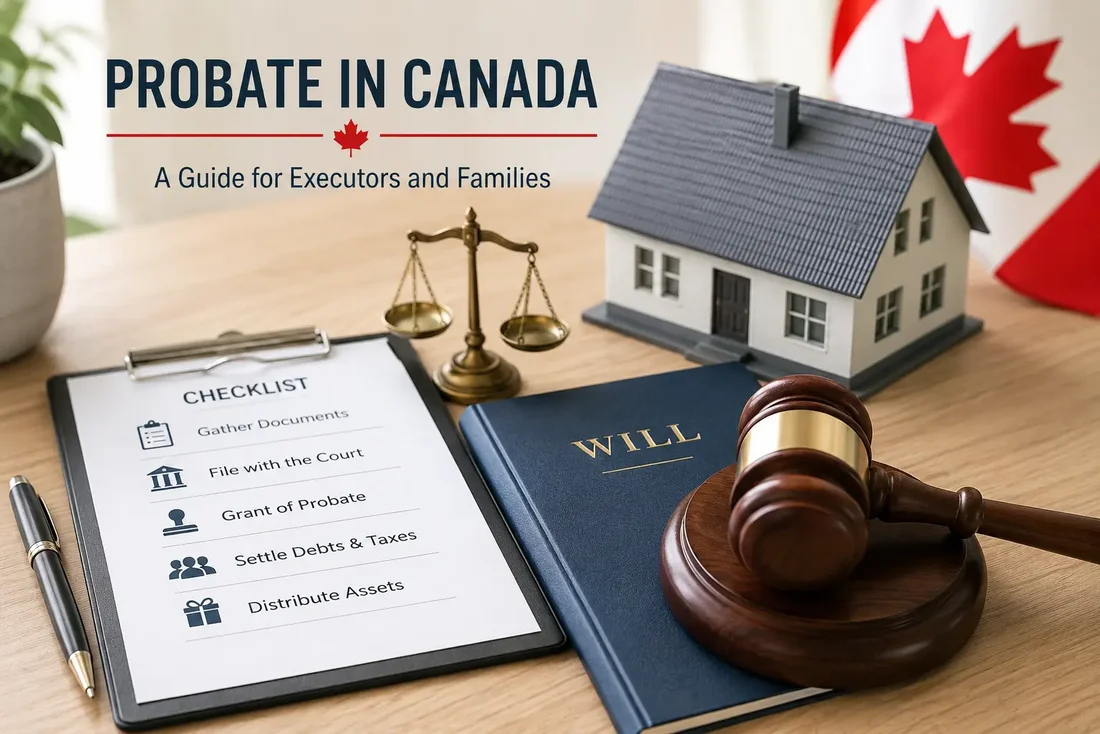
When a loved one passes away, families are often left dealing with grief while also managing legal and financial responsibilities. One of the most common questions people ask during this time is, "How long does probate take in Canada?" The answer depends on several factors, including the size of the estate, the province where the deceased lived, the complexity of the assets, and whether there are disputes among beneficiaries. In some cases, probate can be completed in a few months. In others, it may take over a year. Understanding the probate process Canada uses can help executors and families prepare for what lies ahead. Probate is often necessary to validate a will, authorize an executor, and allow the estate to be distributed properly. Although the process can feel overwhelming, having a clear understanding of timelines and responsibilities can make it much easier to manage. This guide explains the Canadian probate timeline, what causes delays, the responsibilities of executors, and strategies that may help speed up the estate settlement process.
Before discussing timelines, it is important to understand what probate actually means. The probate process Canada uses is a legal procedure that confirms a deceased person’s will is valid. It also gives the executor the legal authority to manage and distribute the estate. In most provinces, the executor must apply to the probate court Canada recognizes in that jurisdiction. Once approved, the court issues a grant of probate or similar document that officially confirms the executor’s authority.
Definition of Probate
Probate is essentially the court’s approval of the will. Financial institutions, government agencies, and land title offices often require probate before they release funds or transfer ownership of assets. Without probate, banks may freeze accounts, and real estate transactions may not proceed. This is why probate estate administration is often necessary when dealing with large estates or multiple assets. The probate process also ensures that debts, taxes, and legal obligations are handled before beneficiaries receive inheritances.
When Probate Is Required
Not every estate in Canada requires probate. Whether it is needed depends on the type of assets involved and how they are owned. Probate is commonly required when:
- The deceased owned real estate solely in their name
- Banks request probate before releasing funds
- There are investment accounts without named beneficiaries
- The estate is large or complex
- There are disputes among beneficiaries
However, probate may not be necessary for jointly owned property or accounts with designated beneficiaries. For example, life insurance proceeds and registered accounts such as RRSPs and TFSAs often pass directly to named beneficiaries. Understanding
Canada's wills and estates laws is important because probate rules vary by province.
The question many families ask is straightforward: how long does probate take in Canada? On average, the Canadian probate timeline ranges from six months to two years. Simpler estates may move faster, while complicated estates can take significantly longer.Probate timelines differ across Canada because each province has its own court system and procedures. In provinces with busy court systems, probate applications may take several months just to be reviewed. In smaller provinces or less populated regions, the process may move faster. Generally, here is what families can expect:
- Simple estates: 3 to 6 months
- Moderate estates: 6 to 12 months
- Complex estates: 12 to 24 months or longer
The executor’s organization and the quality of the application can also affect how quickly probate is granted.The
probate process Canada follows usually includes several stages.
Preparing the Application
The executor gathers documents such as the following:
- The original will
- Death certificate
- Asset and debt information
- Property valuations
- Tax details
This stage alone can take several weeks if records are incomplete.
Filing With the Court
Once documents are prepared, the executor submits the probate application to the probate court Canada uses in that province. The court reviews the application for errors or missing information.
Court Review and Approval
Court processing times vary significantly. If the application is straightforward, approval may happen quickly. If the court requests corrections, delays can occur.
Estate Administration
After probate is granted, the executor begins the estate settlement process by:
- Paying debts
- Filing taxes
- Selling assets if necessary
- Distributing inheritances
This stage often takes the longest.
Many estates take longer than expected because of issues that arise during probate estate administration. Understanding these common delays can help families plan realistically.
Missing or Contested Wills
One of the biggest causes of delay is a missing or disputed will. If family members challenge the validity of the will, probate can take years instead of months. Common disputes include:
- Claims of undue influence
- Concerns about mental capacity
- Questions about will changes
- Allegations of fraud
Court hearings and legal proceedings can significantly slow the Canadian probate timeline.
Complex Estates and Multiple Properties
Estates involving businesses, investment portfolios, or multiple properties usually take longer to settle. Real estate transactions can delay the estate settlement process, especially if properties must be sold before funds are distributed. Vacation homes, rental properties, and foreign assets add even more complexity.
Tax Issues and Outstanding Debts
Executors are responsible for ensuring taxes are paid before distributing assets. This includes filing the deceased person’s final tax return and obtaining a clearance certificate from the Canada Revenue Agency. If tax information is incomplete or the estate owes substantial taxes, delays are likely. Creditors may also file claims against the estate, which must be resolved before beneficiaries receive distributions.
Errors in Probate Applications
Simple mistakes can create major setbacks. Missing signatures, inaccurate valuations, or incomplete forms may cause the probate court Canada system to reject the application. Executors who are unfamiliar with legal procedures often experience delays because applications must be corrected and resubmitted.
The executor plays a critical role throughout the probate process Canada uses. Understanding executor duties in Canada families rely on can help reduce confusion and delays.
Filing Documents Correctly
Executors must prepare and submit accurate legal paperwork. This includes
- Probate applications
- Court forms
- Asset inventories
- Notices to beneficiaries
Because probate laws vary by province, many executors choose to work with lawyers to avoid errors.
Managing Estate Assets
Executors are responsible for protecting and managing estate property during probate estate administration. This may involve:
- Securing homes and valuables
- Maintaining insurance
- Managing bank accounts
- Paying bills and debts
- Overseeing investments
Executors have a fiduciary duty, meaning they must act in the best interests of the beneficiaries.
Communicating With Beneficiaries
Clear communication is extremely important during the estate settlement process. Beneficiaries often become frustrated when probate takes longer than expected. Regular updates can reduce tension and prevent misunderstandings. Executors should document all major decisions and keep detailed financial records.
Distributing Assets
Once debts and taxes are paid, the executor distributes the remaining assets according to the will. This final stage can take time if the estate includes property sales or complicated financial arrangements.
In addition to delays, many families are concerned about probate fees Canada charges. Probate fees vary widely by province and are usually based on the value of the estate.
How Probate Fees Are Calculated
Some provinces charge relatively low flat fees, while others charge a percentage of the estate value. For larger estates, probate fees can be significant. For example:
- Smaller estates may pay only a few hundred dollars
- Large estates may pay thousands in probate fees
Executors should understand local probate court Canada fee structures before filing applications.
Additional Legal and Administrative Costs
Beyond probate fees, estates often face additional expenses such as:
- Lawyer fees
- Accounting fees
- Property appraisals
- Real estate commissions
- Court filing costs
These costs are usually paid from the estate before beneficiaries receive their inheritances.
Why Professional Help Can Be Valuable
Although hiring professionals increases upfront costs, it can sometimes save money in the long run. Experienced estate lawyers understand Canada's wills and estates laws and can help
avoid mistakes that lead to delays or disputes. Accountants may also assist with tax filings and financial reporting.
Many Canadians explore legal strategies for avoiding probate in Canada. While probate cannot always be avoided entirely, proper estate planning may reduce the amount of assets that pass through probate.
Joint Ownership Strategies
Joint ownership is one of the most common probate avoidance methods. When property is owned jointly with a right of survivorship, ownership automatically transfers to the surviving owner after death. This often applies to:
- Family homes
- Joint bank accounts
- Some investment accounts
However, joint ownership should be used carefully because it can create legal and tax complications.
Naming Beneficiaries on Assets
Certain financial products allow direct beneficiary designations. Examples include
- RRSPs
- RRIFs
- TFSAs
- Life insurance policies
When beneficiaries are properly named, these assets usually bypass the probate process Canadian courts oversee.
Using Trusts for Estate Planning
Trusts are another strategy for avoiding probate in Canada. Assets held in trust may not form part of the probate estate. Trusts can also:
- Provide privacy
- Reduce estate delays
- Protect vulnerable beneficiaries
- Improve tax planning
However, trusts require careful legal planning and may not be suitable for every family.
Updating Estate Plans Regularly
Outdated estate plans can create unnecessary complications. Families should review wills and beneficiary designations regularly, especially after:
- Marriage
- Divorce
- Birth of children
- Property purchases
- Major financial changes
Good planning can simplify probate estate administration and reduce stress for loved ones.
Although some delays are unavoidable, there are practical ways to improve the
Canadian probate timeline.
Organize Documents Early
One of the best ways to speed up probate is to keep important records organized. Executors should gather the following:
- Death certificates
- Bank statements
- Investment records
- Property deeds
- Insurance policies
- Tax returns
Having complete records available early can prevent major delays.
Work With Probate Professionals
Professional guidance often helps estates move more efficiently. Estate lawyers understand the probate process Canada uses and can ensure applications are completed properly. Financial advisors and accountants can also help manage complex assets and tax obligations.
Avoid Family Disputes
Family conflict is one of the biggest threats to a smooth estate settlement process. Clear communication and transparent decision-making can reduce tension. Encouraging family members to discuss estate plans before death may also help prevent future disputes.
File Taxes Promptly
Executors should prioritize tax obligations early. Waiting too long to address tax issues can significantly delay probate estate administration. Obtaining a CRA clearance certificate before distributing assets is also important because executors may become personally liable for unpaid taxes.
Keep Beneficiaries Informed
Beneficiaries are often more patient when they understand what is happening. Regular updates about timelines, delays, and estate progress can help maintain trust. Executors who communicate openly are less likely to face legal disputes.
Many families have additional questions about how long probate takes in Canada. Here are answers to some common concerns.
Can Probate Be Completed in a Few Months?
Yes, some simple estates are completed quickly. If the estate is small, uncontested, and well organized, probate may be granted within a few months. However, even straightforward estates often require additional time for tax clearance and final asset distribution.
What Happens if There Is No Will?
When someone dies without a will, they are considered to have died intestate. Provincial laws determine who inherits the estate. The court may appoint an administrator instead of an executor, which can lengthen the estate settlement process.
Does Every Asset Go Through Probate?
No. Jointly owned assets and accounts with named beneficiaries may bypass probate. Understanding which assets require probate is an important part of estate planning.
Can Beneficiaries Receive Money Before Probate Ends?
In some cases, executors may provide interim distributions; however, executors must ensure there are enough estate funds to cover taxes, debts, and legal obligations before distributing assets.
The probate process Canada families experience can feel complicated, especially during an emotionally difficult time. While some estates are resolved within months, others may take a year or more depending on the complexity of the estate and the circumstances involved. Understanding how long probate takes in Canada helps families set realistic expectations and prepare for the responsibilities ahead. The Canadian probate timeline is influenced by many factors, including
- Court processing times
- Executor organization
- Estate complexity
- Tax obligations
- Family disputes
- Accuracy of legal paperwork
Executors who understand executor duties and Canadian laws are better prepared to manage the estate efficiently. Planning ahead can also make a major difference. Proper estate planning, organized records, and updated wills and estate documents in Canada can reduce delays and minimize stress for loved ones. For families dealing with probate estate administration, professional guidance from lawyers and accountants may help simplify the process and avoid costly mistakes. Although probate can take time, careful preparation and clear communication can make the estate settlement process more manageable for everyone involved. Whether you are an executor, beneficiary, or someone planning your own estate, understanding probate fees Canada imposes, the role of the probate court Canada system, and strategies for avoiding probate in Canada can help you make informed decisions for the future. If the estate includes real estate, the process can quickly become more complex. Property may need to be valued, maintained, sold, or transferred before the estate can be fully settled. For guidance on probate related real estate decisions in Vancouver and across British Columbia,
connect with Adam Chahl, founder of Vancouver Home Search and a trusted real estate advisor with Place Real Estate Team | Oakwyn Realty. Adam can help families, executors, and beneficiaries understand their options, evaluate property value, and make confident decisions during the estate settlement process.