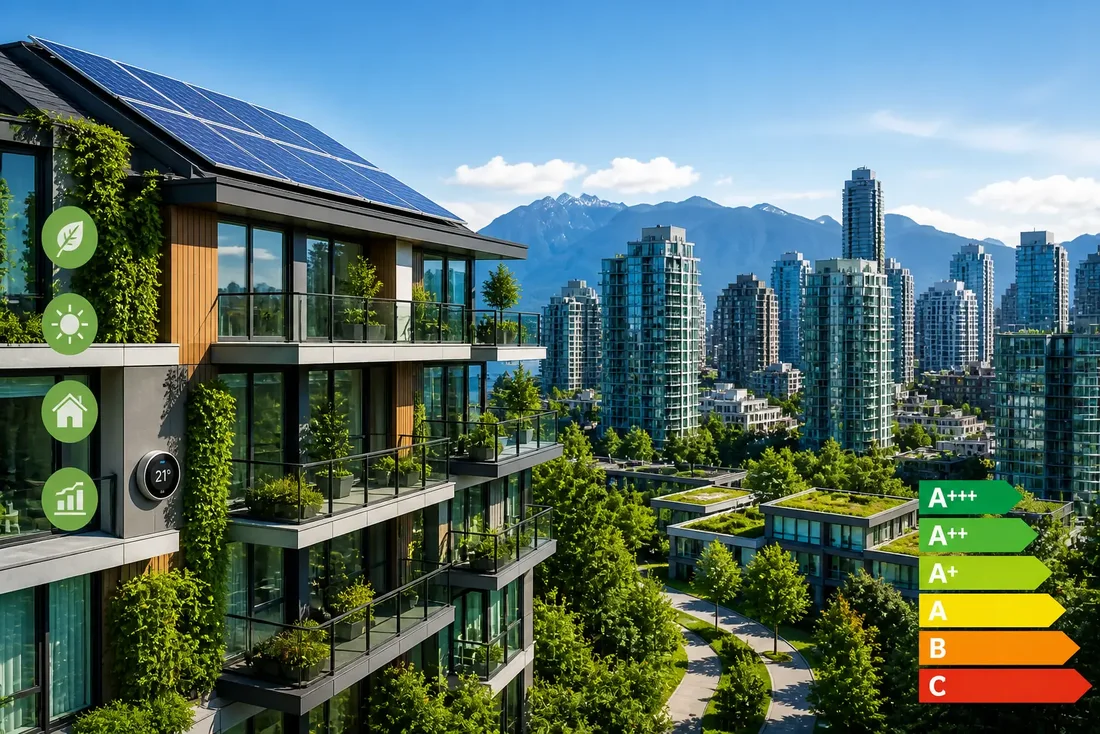
 The short list of energy-efficient home upgrades Canadian homeowners should focus on in 2026 is not glamorous, but it is effective: smart controls, attic and envelope insulation, cold-climate heat pumps, and then windows and solar, where the math and rebates support them. That ranking fits both buyer demand and market reality. CMHC found that 55 percent of mortgage consumers renovated in the last three years; 75 percent plan to renovate in the next five; more than one in four completed energy-efficiency renovations; about 30 percent plan to do them next; 93 percent of those who completed them were very satisfied; and about 80 percent reported lower energy bills. It also found that 61 percent of buyers said an energy-efficient home mattered in their purchase decision. The money side has changed. Natural Resources Canada says the Canada Greener Homes Grant is closed, and the Canada Greener Homes Loan is also closed to new applications, so 2026 support is more targeted: provincial utility and provincial government rebates, oil-to-heat-pump support, and low- to median-income affordability programs now matter more than the old broad federal stack.
 At the same time, federal support has already helped drive a large wave of adoption, with 286,778 new heat pumps installed with federal support by March 2026. For homeowners looking for cost-saving home upgrades, Canadian readers can actually defend with numbers, the best sequence is usually this: tighten the shell, optimize controls, then replace expensive heating equipment, then do windows or solar if your home, rate, and rebate stack justify it. Put bluntly: if you install expensive gear into a leaky house first, you are paying premium dollars to heat the outdoors. Nature loves that plan. Your wallet does not.
Why is this the moment
The 2026 backdrop is pushing homeowners toward practical home energy efficiency improvements rather than discretionary makeover spending. CMHC expects Canada's housing demand to improve only gradually, with sales still below historical averages and prices showing only modest gains after falling in 2025. Reuters reported on April 28, 2026, that national home prices were down 20 percent from the February 2022 peak, while consumer spending and sentiment were being hit by the housing correction. Global News also reported that Home Depot was seeing significantly reduced demand as customers delayed home building and renovation projects because of inflation, job concerns, and financing costs. In plain English, homeowners want upgrades that cut monthly costs and still help resale appeal.The physics also makes the ranking pretty clear. Official Canadian residential energy data shows space heating is still the largest energy use in the home, at roughly the mid-40 percent range, while water heating is roughly 12 percent. That is why the best Canadian home retrofit upgrades attack heating load first: air leakage, insulation, smart controls, and heating equipment. Fancy gadgets that do not touch the heating bill usually land in the nice-to-have bucket.
The upgrade stack that wins
Among smart home energy-saving upgrades, thermostats and smart heating controls still have the cleanest short-payback case. BC Hydro shows a sample line-voltage smart thermostat costing about C$139 and saving about C$102.50 a year, with payback in under two years. In Québec, Hydro-Québec says replacing old dial thermostats with electronic ones can lower annual electricity bills by 10 percent, and smart thermostats tied to Rate Flex D can help save up to 20 percent on winter electricity bills when combined with other load-shifting measures. For a low-cost first move, this is hard to beat. Insulation is still the least sexy move with the strongest medium-ticket logic. Enbridge Gas says insulation combined with air sealing improves comfort, reduces costs, and reduces environmental impact. Recent Canadian guidance from a major retailer also points homeowners toward attics, basement walls, and crawl spaces first, with climate-appropriate R-values varying by province and zone. That matches the common pattern in older homes: fix the top of the house first, then the basement and rim joists, then decide whether windows are still the problem. If someone searches "energy-efficient windows and insulation Canada," the honest answer is that insulation usually comes first.Heat pumps are now the headline move, but the savings story is fuel-dependent, not universal. The Canadian Climate Institute concluded that heat pumps are the lowest-cost heating and cooling option for most households over the lifetime of the system, especially in regions with cleaner grids and relatively higher gas or oil costs. Ontario program guidance says a cold-climate air-source heat pump can save up to 50 percent on the heating portion of electricity bills when replacing electric resistance heat and up to 50 percent on home heating costs when replacing oil. The same institute also found specific annual savings in several cities, ranging from about C$100 in some gas-backup city scenarios to more than C$600 in places like Fredericton and Québec City. The practical read is simple: if you are replacing oil or electric resistance and you want cooling too, this is often the best big-ticket move. If you have cheap gas and a fairly efficient furnace, the case is still often good over system life but less dramatic on simple payback. Windows are the upgrade many owners want first, and the one the math often tells them to postpone.
Home Depot says average window replacement cost is about C$800 per window, or about C$8,000 to C$11,000 for ten windows. BC Hydro says ENERGY STAR windows can cut annual energy costs by up to 20 percent, but even that usually produces a much slower payback than insulation or controls. That does not make Windows a bad choice. It makes them a comfort, condensation, draft, noise, and curb appeal choice first, with bill savings as a bonus. If your current windows are failing, rotting, or sweating like a gym bottle in July, replace them. If they are merely boring, do the shell and heating work first. Solar is becoming more interesting again, but it is still a selective priority rather than a universal one. BC Hydro offers up to C$5,000 for eligible residential solar and up to another C$5,000 for battery storage. In Québec, Hydro-Québec launched a residential solar subsidy in 2026 at C$1,000 per kW installed, up to 40 percent of the eligible project cost, and said that the new support could shrink payback from roughly 25 to 30 years to about 10 to 12 years for a typical residential project in Québec. In provinces with higher power rates and decent roofs, solar can be compelling. In low-rate hydro provinces without a strong rebate stack, it is often still a second-wave move after insulation and HVAC.
Cost, savings, and payback by upgrade
The table below uses typical installed costs before rebates. Where a source page published a percent savings claim rather than a Canada-wide dollar figure, the annual savings range is modeled from the cited bill examples and provincial electricity or heating-cost references.Smart thermostats or smart heating controls are one of the lowest cost upgrades, typically costing around C$140 to C$250 to install, while saving about C$100 to C$340 per year, giving a fast payback of roughly 0.5 to 2.5 years. Attic insulation top ups usually range from C$1,500 to C$3,000, with annual savings between C$150 and C$425, resulting in a payback period of about 4 to 15 years. ENERGY STAR windows and doors are a bigger investment, costing around C$8,000 to C$11,000 for about 10 windows, and saving roughly C$275 to C$440 per year, which means a longer payback of about 18 to 40 years. Cold climate air source heat pumps typically cost between C$7,500 and C$15,000 or more, but can save homeowners around C$300 to C$1,200 annually, with a payback period of about 6 to 25 years. Rooftop solar systems have the highest upfront cost, ranging from C$10,000 to C$30,000, but they also offer strong annual savings of around C$1,100 to C$1,800, with payback periods typically falling between 6 to 27 years.
Approximate midpoint payback before rebates: Smart thermostat, attic insulation, heat pump, solar PV, windows. 30, 28, 26, 24, 22, 20, 18, 16, 14, 12, 10, 8, 6, 4, 2, 0 years.
Rebate map by province
The broad federal grant-and-loan era is over. In 2026, the best rebate hunting is provincial, utility-driven, and often income-targeted.In 2026, homeowner rebates across Canada have shifted, with federal programs becoming more limited while provinces step in with stronger incentives. At the federal level, both the Canada Greener Homes Grant and Loan are now closed to new applications, with support focusing on targeted programs like Oil to Heat Pump Affordability and new affordability streams for low to median-income households.
In British Columbia, Better Homes BC offers up to C$4,000 for qualifying electric heat pumps, up to C$5,500 for insulation, and income-qualified programs that can reach up to C$19,000 for heat pumps and C$9,500 for windows and doors. Ontario’s Home Renovation Savings program provides up to C$7,500 for cold climate air source heat pumps, up to C$7,700 for insulation, C$100 per rough opening for windows and doors, C$100 for smart thermostats, and up to C$10,000 for solar with battery storage.
In Quebec, Hydro Québec’s LogisVert program offers up to C$6,700 for efficient heat pumps, while Rénoclimat continues to support insulation, airtightness, and window upgrades, and new residential solar incentives launched in 2026 provide C$1,000 per kW up to 40 percent of project costs. Nova Scotia, through Efficiency Nova Scotia, offers up to C$5,000 via the Home Energy Assessment stream, which can be combined with moderate income rebates for a total of up to C$10,000, plus up to C$15,000 for oil to heat pump conversions. In New Brunswick, SaveEnergyNB provides free upgrades for many lower-income households and up to C$15,000 in advance for switching from oil to heat pumps.
Manitoba’s Efficiency Manitoba program offers some of the strongest support, with up to C$20,000 upfront for eligible oil heated homes transitioning to heat pumps, along with insulation rebates based on area and R value, and even ground source heat pump options with no upfront cost and structured monthly repayment plans for qualifying homeowners. Source basis for the table above: Federal program status comes from Natural Resources Canada and Canada affordability-program rollout material; British Columbia from Better Homes BC rebate pages; Ontario from current Home Renovation Savings pages; Québec from Hydro-Québec LogisVert plus Québec Rénoclimat pages; Nova Scotia from Efficiency Nova Scotia rebate pages and program snippets; New Brunswick from SaveEnergyNB; and Manitoba from Efficiency Manitoba and Canada affordability-program rollout material. Program details change fast, so use the cited pages as the source of truth before you sign anything.
For most existing homes, the highest-priority order is smart controls and air sealing, attic insulation, and then a cold-climate heat pump if the heating system is old or costly to run. Windows and solar usually come later unless your current windows are failing or your province offers unusually strong solar support.
Priority checklist by budget
- Low cost and fast ROI: start with smart thermostats or smart heating controls, weatherstripping, and basic air sealing. This is the best bucket for people who want to reduce energy bills at home in Canada without opening walls. It is also the bucket most people skip because it is not photogenic. Very rude of reality, but there it is.
- Medium cost and strong value: top up attic insulation, fix weak basement or rim-joist insulation, and consider a heat pump water heater when an electric tank is nearing the end of its life. Efficiency Nova Scotia says heat pump water heaters can save about C$250 to C$500 a year and use up to 60 percent less energy than traditional models, which is exactly the kind of boring hero upgrade this article likes.
- High cost and strategic: Install a cold-climate heat pump if you are replacing oil or electric resistance; replace windows only when the old ones are truly failing or uncomfortable; and add rooftop solar after you have already done envelope and HVAC basics unless your province rebate stack is unusually strong. These are the eco-friendly home improvements Canada homeowners should treat as strategic capital moves, not impulse buys.
FAQ
What are the best energy-efficient renovations 2026 homeowners should do first?For most existing homes, the highest-priority order is smart controls and air sealing, attic insulation, and then a cold-climate heat pump if the heating system is old or costly to run. Windows and solar usually come later unless your current windows are failing or your province offers unusually strong solar support.
Do heat pumps save money in Canada?
Usually yes, but the biggest savings come when you replace oil or electric resistance heat. Ontario program guidance says savings can reach up to 50 percent of the heating portion of electric bills or up to 50 percent of home heating costs when switching from oil, while Canadian Climate Institute modeling found lower-cost lifetime performance for most households and annual savings that ranged from about C$100 to more than C$600 in several city scenarios.
Usually yes, but the biggest savings come when you replace oil or electric resistance heat. Ontario program guidance says savings can reach up to 50 percent of the heating portion of electric bills or up to 50 percent of home heating costs when switching from oil, while Canadian Climate Institute modeling found lower-cost lifetime performance for most households and annual savings that ranged from about C$100 to more than C$600 in several city scenarios.
Are new windows worth it for bill savings?
Sometimes, but usually not as a first move. Window replacements can improve comfort, reduce drafts and condensation, and support buyer appeal, but the pure bill-savings payback is often much slower than insulation or smart controls.
Sometimes, but usually not as a first move. Window replacements can improve comfort, reduce drafts and condensation, and support buyer appeal, but the pure bill-savings payback is often much slower than insulation or smart controls.
What rebates are available in 2026?
The old broad federal grant and loan are closed to new applications. The active money now is mostly provincial and utility-based, plus targeted federal affordability support and oil-to-heat-pump support.
The old broad federal grant and loan are closed to new applications. The active money now is mostly provincial and utility-based, plus targeted federal affordability support and oil-to-heat-pump support.
Should I do insulation before a heat pump?
Usually yes. Heating is still the largest energy use in most homes, so reducing heat loss first can improve comfort and sometimes let you install smaller equipment. The exception is the emergency replacement scenario, where a dead oil or electric resistance system may force the heat pump decision first.
Usually yes. Heating is still the largest energy use in most homes, so reducing heat loss first can improve comfort and sometimes let you install smaller equipment. The exception is the emergency replacement scenario, where a dead oil or electric resistance system may force the heat pump decision first.
Will energy upgrades increase home value in Canada?
They can improve buyer appeal and marketability, but not every dollar returns equally. CMHC found that 61 percent of buyers view energy efficiency as important in purchase decisions, and many renovators cite both home value and energy efficiency as key reasons to renovate, which supports the case for documented, comfort-improving upgrades over novelty tech.
They can improve buyer appeal and marketability, but not every dollar returns equally. CMHC found that 61 percent of buyers view energy efficiency as important in purchase decisions, and many renovators cite both home value and energy efficiency as key reasons to renovate, which supports the case for documented, comfort-improving upgrades over novelty tech.
If you want to increase home value and lower operating costs at the same time, do not start with the prettiest upgrade. Start with the hardest-working one. Book the assessment or rebate screening that your province still requires, collect insulation and heat pump quotes at the same time, and check whether you can stack provincial support with CMHC Eco Improvement if your mortgage is CMHC-insured and you will spend at least C$20,000 on eligible energy-efficient renovations. That is how you turn a feel-good project into a conversion-friendly, balance-sheet-friendly plan.
Work With an Expert Who Knows Where the Real Opportunities Are
If you are serious about buying, selling, or investing in Vancouver condos, guessing is expensive.You need someone who understands the numbers, the neighborhoods, and the timing. That is where Adam Chahl comes in.With deep experience in the Vancouver market, Adam helps clients:
- Identify undervalued condo opportunities
- Avoid risky buildings and bad investments
- Navigate negotiations with confidence
- Make data-driven decisions that actually perform