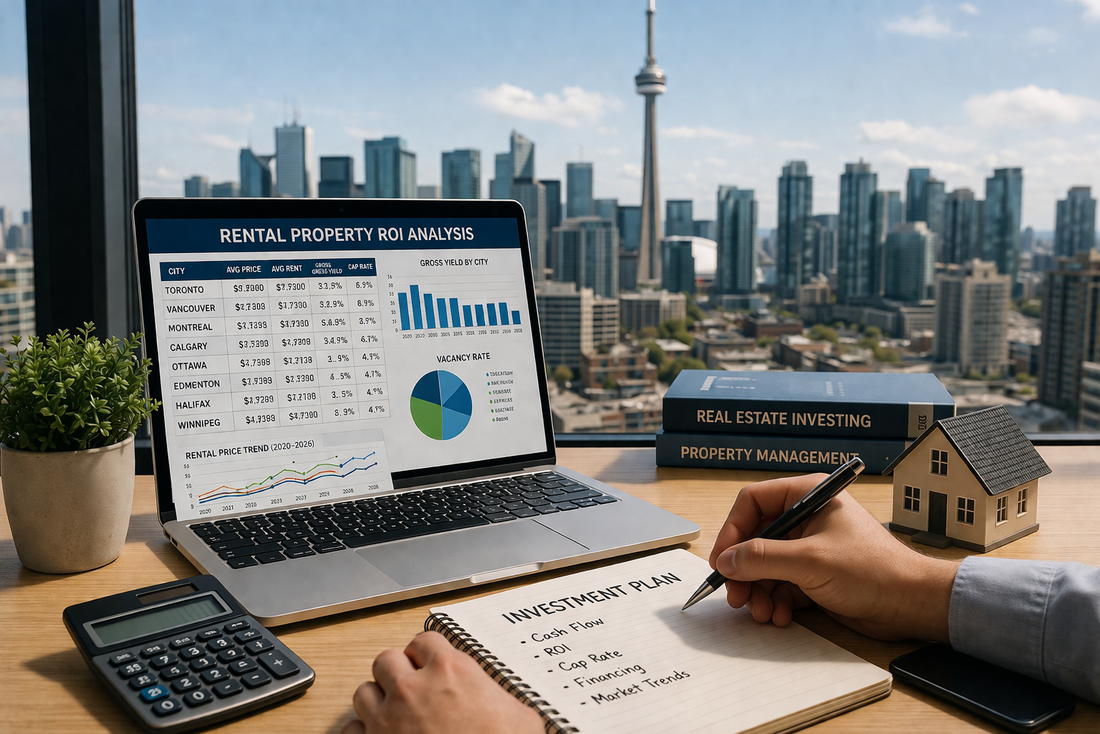
Canada’s rental market has gone through a major shift since 2020. A surge in demand during 2021–2022 created record-low vacancy rates and rapid rent increases. By 2023–2024, rising mortgage rates and new housing supply began to stabilize the market. Moving into 2025–2026, investors are seeing more balanced conditions, with moderate rent growth and improving inventory. Understanding rental property ROI in this environment is critical. While major cities like Toronto and Vancouver still dominate headlines, smaller markets are now offering stronger returns. This guide breaks down the numbers, compares cities, and helps you identify where real estate investment opportunities in Canada are strongest today.To evaluate performance, investors rely on several key metrics:
Gross Yield
This is the simplest measure of return. Gross Yield = Annual Rent ÷ Property Price × 100. It gives a quick snapshot but does not account for costs.
Net Yield
This includes expenses such as taxes, maintenance, and insurance. Net yield provides a more accurate picture of actual profitability.
Cap Rate
The cap rate measures return based on net operating income. Cap Rate = Net Operating Income ÷ Property ValueThis is one of the most widely used metrics in
real estate investment in Canada.
Cash-on-Cash Return
The cash-on-cash return shows how much you earn on your actual invested cash.Cash-on-cash = Annual Cash Flow ÷ Total Cash Invested. This is especially important when financing with a mortgage.Here is a breakdown of
average rent in Canada, property prices, and returns across major cities:
- Toronto
Price: ~$545,000
Rent: ~$2,690
Vacancy: ~2.5%
Gross Yield: ~5.9%
Cap Rate: ~4–4.5%
Cash-on-Cash: Negative (~–2%) - Vancouver
Price: ~$706,700 - Rent: ~$3,170
Vacancy: ~1.6%
Gross Yield: ~5.4%
Cap Rate: ~4%
Cash-on-Cash: Negative (~ -5%) - Montreal
Price: ~$425,000
Rent: ~$1,930
Vacancy: ~2.1%
Gross Yield: ~5.5%
Cap Rate: ~4.5%
Cash-on-Cash: Negative (~–4%) - Calgary
Price: ~$305,000
Rent: ~$1,920
Vacancy: ~4.8%
Gross Yield: ~7.6%
Cap Rate: ~6%
Cash-on-Cash: ~6% - Ottawa
Price: ~$384,700
Rent: ~$2,490
Vacancy: ~2.6%
Gross Yield: ~7.8%
Cap Rate: ~6.5%
Cash-on-Cash: ~7% - Edmonton
Price: ~$195,000
Rent: ~$1,493
Vacancy: ~2%
Gross Yield: ~9.2%
Cap Rate: ~7.5%
Cash-on-Cash: ~14% - Halifax
Price: ~$435,500
Rent: ~$1,750
Vacancy: ~2.6%
Gross Yield: ~4.8%
Cap Rate: ~4%
Cash-on-Cash: Negative (~–8%) - Winnipeg
Price: ~$230,000
Rent: ~$1,507
Vacancy: ~1.7%
Gross Yield: ~7.9%
Cap Rate: ~6.5%
Cash-on-Cash: ~7%
The numbers show a clear trend. High-cost cities like Toronto and Vancouver offer lower
rental property ROI due to expensive entry points. Even with a strong average rent in Canada, the high purchase price reduces profitability. On the other hand, cities like Edmonton, Calgary, and Winnipeg deliver
stronger gross yield and cash-on-cash return. Lower prices combined with stable rent levels make them ideal for investors focused on income. Ottawa stands out as a balanced market, offering both stability and solid returns. Montreal remains a middle-ground option with moderate pricing and steady demand.The vacancy rate plays a direct role in ROI. Lower vacancy means more consistent rental income, while higher vacancy reduces effective returns.
- Tight markets like Winnipeg maintain strong rent growth
- Rising vacancy in Calgary reflects new supply but still supports strong yields
- Vancouver and Toronto remain competitive but show slower rent growth
As supply increases across Canada, vacancy rates are expected to stabilize, which may moderate rent increases but improve long-term sustainability.
Taxes and Insurance
Property taxes and insurance typically account for around 1% of property value annually. These costs directly reduce net yield and cap rate.
Maintenance Costs
Maintenance can take up 5–10% of rental income. Older properties often require higher capital expenses.
Mortgage Rates
Current mortgage rates significantly impact cash flow. Higher rates reduce cash-on-cash return, especially in expensive markets.
Regulations
Rent control policies limit how quickly landlords can increase rent, affecting long-term income growth.
Property Type
Condos often come with additional fees, while freehold and multi-unit properties tend to offer better returns.
- 2020: Rental demand drops temporarily
- 2021–2022: Strong rebound, rent surge
- 2023: Interest rate hikes slow growth
- 2024: Increased housing supply raises vacancy
- 2025: Market stabilizes
- 2026: Gradual recovery with improved balance
These
housing market trends show a transition from rapid growth to a more sustainable investment environment.
Choose the Right Market
Focus on cities with strong fundamentals. Edmonton, Calgary, and Ottawa currently offer the
best rental property ROI.
Optimize Financing
Lower mortgage rates can significantly improve returns. Locking in favorable rates is key.
Focus on Cash Flow
If your goal is income, prioritize markets with higher cash-on-cash return rather than appreciation.
Manage Expenses
Keeping costs low improves both net yield and cap rate.
Diversify Property Types
Multi-family properties often generate stronger and more stable income than single units.
Yes, but strategy matters more than ever. The days of relying solely on appreciation are shifting. Investors now need to focus on
rental property ROI, cap rate, and sustainable income. Markets like Toronto and Vancouver still offer long-term growth, but cities like Edmonton and Calgary provide stronger immediate returns.
Rental property ROI in Canada varies significantly by city. High-cost markets deliver stability but lower yields, while more affordable cities offer stronger income potential. By understanding gross yield, net yield, cap rate, and cash-on-cash return, investors can make smarter decisions. As the market continues to evolve, those who
focus on data, manage costs, and choose the right locations will be best positioned for success.
1. What is a good cap rate for rental property in Canada?
A good cap rate typically ranges from 5% to 7%, depending on the market and property type.
2. What is the difference between gross yield and net yield?
Gross yield does not include expenses, while net yield accounts for costs like taxes, maintenance, and insurance.
3. Which Canadian city has the best rental property ROI?
Cities like Edmonton and Calgary currently offer the highest rental property ROI due to lower property prices and strong rental demand.
4. How do mortgage rates affect ROI?
Higher mortgage rates reduce cash flow and lower cash-on-cash return, making financing a critical factor.
5. Is real estate still a good investment in Canada in 2026?
Yes, real estate investment in Canada remains strong, especially in markets with growing populations and balanced supply-demand conditions.