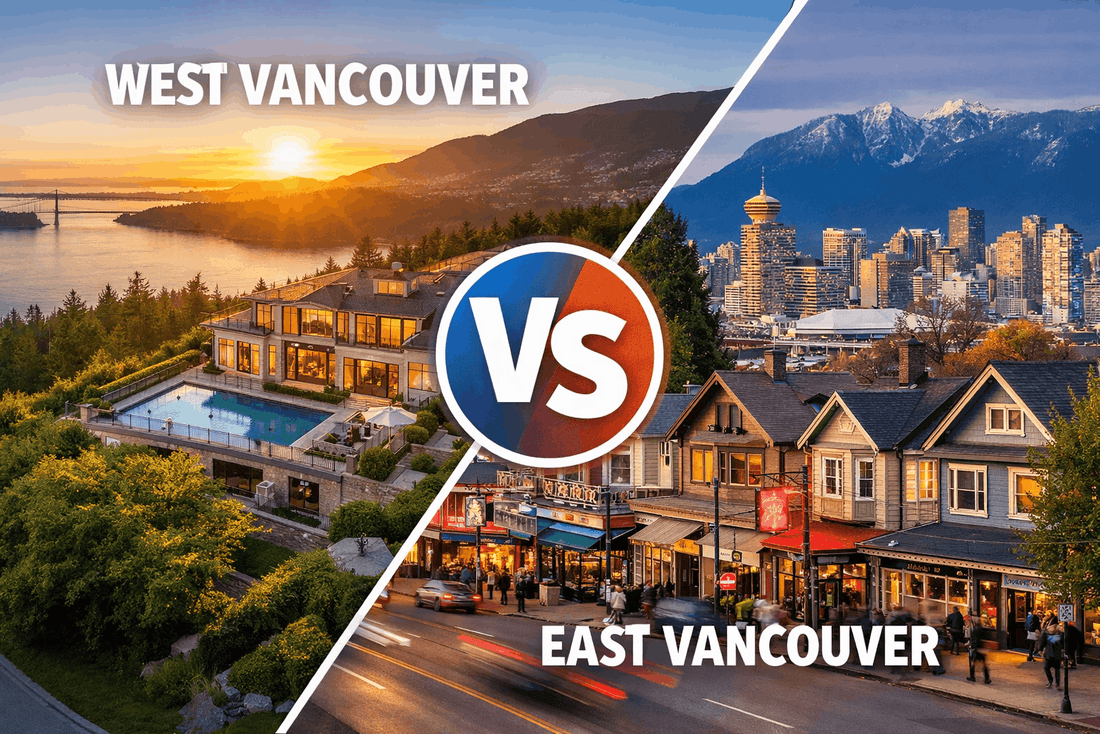
 Vancouver’s real estate landscape is famously varied. East Vancouver (east of Main/Cambie) spans vibrant, diverse neighborhoods from Mount Pleasant up to Hastings and Grandview. West Vancouver, in this context, refers to the city’s affluent west side as well as the separate District of West Vancouver across the inlet. These areas differ sharply in price, housing stock, lifestyle, and demographics. East Van offers a unique blend of urban living and community charm, whereas the Westside is synonymous with luxurious and refined living. Below we profile key neighborhoods on each side, compare market trends (2024–2026), outline buyer profiles, and highlight pros and cons of each.
Neighborhood Profiles
East Vancouver (East Side Vancouver)
East Vancouver, often called the East Side or “East Van,” encompasses established and up-and-coming neighborhoods like Hastings–Sunrise, Grandview–Woodland, Mount Pleasant, Renfrew–Collingwood, and Strathcona. Housing is diverse: quaint character homes, modern townhomes, and concrete lofts/condos. This diversity caters to many buyers, from first-time homebuyers and families to investors. East Van is noted for its strong community spirit—residents often rally around local festivals and neighborhood events.Green space is plentiful: parks like Trout Lake (John Hendry Park) and the lush Renfrew Ravine provide recreation. The cultural scene is rich and eclectic: Commercial Drive and Main Street offer ethnic eateries, independent shops, and annual street fairs. Art and music thrive, with galleries and venues like The Cultch theatre.
Several well-regarded schools serve East Vancouver, making it family-friendly. Public transit is strong; the SkyTrain Expo/Canada Lines run through parts of the East Side, and numerous bus routes connect downtown to the neighborhoods.
In short, East Van appeals to those seeking affordability, street-level culture, and community—often at the expense of higher density and some older housing stock.
Vancouver Westside (City of Vancouver’s West Side)
Vancouver’s Westside includes communities like Kitsilano, Dunbar, Kerrisdale, Shaughnessy, Point Grey, Fairview, and Oakridge. This area is characterized by prestigious neighborhoods and stately homes. Large heritage mansions and luxury new builds line quiet, tree-lined streets, while vibrant shopping districts like South Granville and West 4th in Kitsilano cater to urban amenities. The Westside is famous for top-notch schools, making it highly attractive to families. Natural beauty abounds—from Kitsilano Beach and Jericho Park to the vast green space of Pacific Spirit Regional Park in UBC/Point Grey.Upscale shops and gourmet restaurants dot the area. Cultural institutions are also prominent: the University of British Columbia’s Museum of Anthropology and the Chan Centre for the Performing Arts. Westside residents enjoy excellent health and wellness facilities. This part of Vancouver offers the densest concentrations of luxury condos and houses in the city. Public transit includes the Canada Line through Fairview, but many rely on buses and private vehicles.
Overall, Vancouver’s Westside epitomizes high-end city living—commanding premium prices for elegant homes, great schools, and ocean/mountain vistas.
West Vancouver (District of West Vancouver – North Shore)
Just across Burrard Inlet, the District of West Vancouver is a separate municipality often lumped together with Vancouver’s West Side. Key neighborhoods include Ambleside/Dundarave, Caulfeild and Altamont, and the exclusive British Properties. West Vancouver is famed for breathtaking scenery, oceanfront parks, mountain views, and hiking trails. Homes range from luxury waterfront estates to sprawling hilltop mansions.The school district is among the province’s strongest. Transit connections include the SeaBus and buses over Lions Gate Bridge or through the Ironworkers Tunnel. Shopping and dining centers are modest, reflecting a more suburban feel. West Vancouver offers resort-style living, quiet, safe streets, and large lots—but is also one of the priciest markets in BC, with multi-million-dollar price tags commonplace.
Market Data and Trends (2024–2026)
The Greater Vancouver housing market has been softening after earlier peaks. MLS® data through 2024–26 show rising inventory and modest price adjustments.As of Feb 2026, there were ~13,545 active listings in Metro Vancouver, and sales totaled 1,648 for the month (down 9.8% from Feb 2025). Low sales have driven the sales-to-active-listings ratio down to ~12.6%, indicating a balanced-to-slightly buyer-favored market. Benchmark prices have ticked up slightly year-over-year but remain below prior peaks.
- Detached home benchmark: ~$1,835,900
- Townhouses: ~$1,046,100
- Apartments: ~$704,600
- Days on market: ~49 (detached homes)
Buyer Profiles and Area Fit
- First-Time Homebuyers: Often gravitate to East Vancouver for smaller, more affordable options. The East Side’s lower entry prices and good transit access make it attractive for young buyers on a budget.
- Growing Families: Seek space and schools. Vancouver’s Westside (and West Vancouver) excel in school quality and family-friendly amenities. Eastside neighborhoods also host many families in townhouses and multiplexes.
- Luxury Buyers: West Vancouver and Vancouver's Westside dominate the luxury market. Ultra-high-end estates in British Properties or Point Grey cater to executives and tech moguls. East Vancouver has almost no true “trophy” mansions—luxury is subtle.
- Investors: East Vancouver often wins on rental yield. Modest condos and multiplexes rent quickly. West Vancouver and Westside investors face higher entry costs; condos there have strong rental markets but lower percentage returns.
Pros and Cons by Area
West Side / West Vancouver
- Price/Affordability:
- Pros: Stable high-end market, strong equity
- Cons: Very expensive; high taxes and payment required
- Lifestyle & Amenities: Upscale shops/dining; quiet, leafy neighborhoods; ocean/mountain views
- Schools & Families: Top public and private schools; ideal for families wanting prestige
- Transit & Access: Car-centric; some Canada Line; commuting can be 20–30+ mins
- Diversity & Culture: More homogeneous; cultural institutions
- Investment Potential: Homes hold value; less rental stock
- Price/Affordability:
- Pros: Much more affordable
- Cons: Lower price means less borrowing value
- Lifestyle & Amenities: Lively, trendy vibe—craft breweries, cafes, ethnic eateries, and abundant parks
- Schools & Families: Good local schools and community programs, but fewer private school options
- Transit & Access: Excellent transit: SkyTrain and buses; easy downtown access
- Diversity & Culture: Highly multicultural, artsy, and diverse; street festivals, galleries
- Investment Potential: Continued rental demand; steady appreciation potential
Featured Property Examples
East Vancouver- 2–5221 Clarendon St, Collingwood – $1,499,888 (3 bd / 4 ba)
- Brand-new home in Collingwood; modern layout, near schools, family-friendly
- 101–1672 E Pender St, Hastings—$1,090,000 (3 bd / 2 ba)
- End-unit townhouse; spacious, near Commercial Drive
- 306–2636 E Hastings St, Renfrew—$553,800 (1 bd / 1 ba)
- 1-bed condo; entry-level East Van option with rental potential
- 1118 Crestline Rd, British Properties – $6,288,000 (7 bd / 9 ba)
- Luxury estate; ocean views, privacy, quintessential West Van
- 2650 Rosebery Ave, Queens – $5,999,000 (5 bd / 6 ba)
- Custom home; luxury finishes, ocean glimpses, large lot
- 5725 Cranley Dr, Eagle Harbour—$2,498,000 (4 bd / 3 ba)
- Family home on large lot; relatively affordable for West Van
Buying Tips and Financing in Vancouver
- Get pre-approval and know your budget
- Study recent sales in your target neighborhood
- Conduct thorough due diligence (home inspections, permits)
- Review strata documents if buying condos/townhouses
- Consider neighborhood specifics (schools, transit, future plans)
- Negotiate strategically; consult a mortgage broker
Looking to find your dream home in West or East Vancouver? Contact Adam Chahl today for expert guidance, personalized property recommendations, and access to the latest listings. Whether you’re buying your first home, upgrading, or investing, Adam can help you navigate Vancouver’s real estate market with confidence. Call or message Adam now to start your search!
FAQs
- How do East Vancouver and West Vancouver compare in home prices?
West Vancouver/Westside is significantly more expensive; East Vancouver detached homes typically benchmark around $1.8–2.0M. - Which area is better for first-time buyers?
East Vancouver is usually better, offering condos and townhomes in the $400K–$1.2M range. - Are West Vancouver schools better than East Vancouver’s?
Generally, yes. West Vancouver and Vancouver's Westside boast top-ranked public and private schools. - What lifestyle differences exist?
Westside/West Van: quiet, upscale, parks, luxury amenities; East Van: urban, vibrant, cultural diversity. - How do commute and transit options differ?
East Vancouver has excellent transit. West Vancouver relies more on SeaBus, buses, and private cars. - What is the real estate investment outlook?
East Vancouver offers better rental yields; West Vancouver/Westside is more stable with lower rental returns. - What neighborhoods on the East Side are up-and-coming?
Hastings–Sunrise, Grandview–Woodland, Collingwood, and Mount Pleasant. - Where can I find parks and green space?
East Van: John Hendry Park, Renfrew Ravine; West Van: Ambleside Park, Cove Cliff Park, Pacific Spirit Park. - Are there condos in East Vancouver?
Yes, many new and older condos are typically priced lower than their Westside counterparts. - What hidden factors should buyers consider?
East Van: some areas with social-service hubs. Westside: higher taxes and living costs. Check strata and inspections.