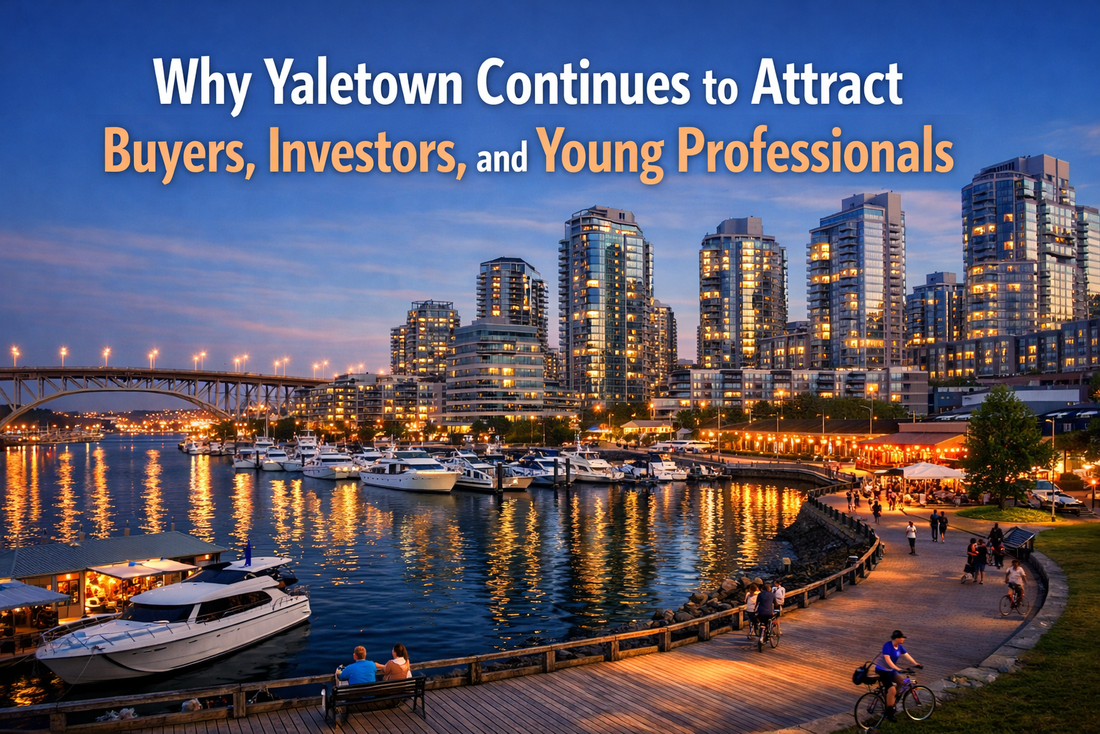
 Yaletown is not just a neighborhood with good restaurants and better patios. It is a compact, transit-rich, waterfront-adjacent part of the city that keeps winning because it solves three problems at once: commute time, lifestyle access, and housing flexibility. That combination keeps demand resilient even when the broader market cools.
The latest regional data shows a quieter start to 2026 across Metro Vancouver, with January 2026 MLS sales down year over year, inventory above long-run seasonal averages, and benchmark prices drifting lower compared with January 2025. Apartments, the dominant housing form in areas like Yaletown, posted a January 2026 benchmark price of $704,600 in Metro Vancouver, with an average of 49 days on the market.
Inside that backdrop, Yaletown's active condo inventory spans a wide band from entry-level studios to true luxury products. February 2026 snapshots show a median list price around $1.1M for Yaletown condos, with offerings from roughly the mid-$400Ks to several million, reflecting everything from older, smaller studios to larger waterfront and penthouse units.
From an investor perspective, the story is straightforward: renters pay for proximity. Downtown-oriented rental zones have meaningful inventory and high turnover, and the citywide housing structure is heavily apartment-based, which keeps condo rentals tightly tied to employment cycles, transit access, and lifestyle amenities. That also means risk is real: strata rules, carrying costs, and resale liquidity matter as much as headline rent.
Neighborhood history and evolution
Yaletown started as a working district shaped by rail and industry, not brunch. The neighborhood name traces back to the Yale area and the rail era, and the district developed as a warehouse and rail yard-oriented industrial zone before its late 20th-century redevelopment into a dense mixed-use residential community.A key physical anchor in this transformation is the Roundhouse Community Arts and Recreation Centre, a former rail facility that is now a civic and community hub. Its presence is a useful clue to how the area changed: adaptive reuse and public space investment came first, then a wave of residential towers and street-level retail followed.
City planning in the broader downtown peninsula also pushed growth inward rather than outward. That matters because it concentrates demand into places where daily life works without a car. In practice, that means neighborhoods like Yaletown became default choices for professionals who prioritize time and access over square footage.
A subtle but important part of Yaletown's identity is that it sits on the edge of waterfront communities shaped by deliberate public realm design. The False Creek walks and Seaside Greenway improvements highlight how much emphasis has been placed on connected waterfront routes and multi-use access, especially around the bridges and the inlet.
Current real estate trends, housing types, and price ranges
The broader market context matters because Yaletown pricing does not move in isolation. In the latest report from Greater Vancouver REALTORS®, total residential sales in Metro Vancouver were 1,107, down year over year, with inventory elevated above seasonal averages.Price dynamics reflect that softer demand and a higher supply mix. The MLS Home Price Index composite benchmark across Metro Vancouver was $1,101,900 in January 2026. Apartments posted a benchmark of $704,600, with 49 average days on the market.
Now zoom into Yaletown, Vancouver, real estate. Most of the neighborhood is condo-based housing with a broad mix of ages, building types, and price per square foot. Market snapshots show over 200 Yaletown condos for sale, with a median condo price of about $1.1M and asking prices ranging from about $455K up to several million.
When people search Yaletown condos for sale, they are usually looking for high-rise concrete towers with amenities and concierge service, loft conversions with character, townhouse-style residences near parks and water, or premium Yaletown luxury condos with panoramic views and larger floor plans.
For buyers tracking Yaletown homes for sale, it is important to understand that most inventory is strata housing. Supply is relatively continuous because there are many similar units, but demand shifts with interest rates and lending conditions.
Entry-level studios sit in the mid-$400Ks, midrange one- and two-bedrooms cluster around the median price point, and Vancouver waterfront condos in Yaletown command a premium for direct seawall access and unobstructed water views.
Lifestyle and daily life
Living in Yaletown, Vancouver, is about compression. Parks, seawall routes, grocery options, transit, and fitness studios sit inside a tight radius.David Lam Park anchors the neighborhood green space along the water. It supports daily routines such as dog walks, morning runs, and casual meetups.
Nearby, George Wainborn Park reinforces the waterfront connection.
The seawall acts as a daily amenity. Residents can run, cycle, or walk along False Creek without leaving the waterfront path.
The Roundhouse Community Arts and Recreation Centre supports recreation and community programming that offsets smaller private living spaces.
Transit access reinforces rental and resale demand, with a near-perfect walkability score supporting car-light households.
What drives demand in the neighborhood
The Yaletown property market sits at the intersection of employment access and lifestyle density.Statistics Canada data for Vancouver confirms that the city's housing stock is heavily apartment-based. This structural reality supports sustained interest in downtown Vancouver condos.
A significant portion of the population falls in the 25 to 44 age range, a demographic that values proximity and flexibility.
Even during slower cycles, demand remains selective rather than absent. Buyers focus on layout efficiency, building quality, and exposure.
Investor perspective: returns, rental demand, and risks
A Yaletown investment property is fundamentally a proximity investment.A one-bedroom rental near $3,000 per month produces roughly $36,000 gross annually. Against a benchmark apartment price of around $704,600, the gross yield sits slightly above 5 percent before expenses.
Expenses matter. Strata fees, property taxes, insurance, vacancy, and financing costs reduce net return.
Primary investor risks include strata cost growth, liquidity risk during slower sales cycles, and financing shifts that impact buyer pools.
Smart investors buy functional layouts, review strata documents carefully, and underwrite deals using conservative assumptions.
How Yaletown compares to nearby neighborhoods
When comparing Downtown Vancouver condos, buyers typically evaluate Yaletown against Coal Harbour and the West End.Coal Harbour tends to skew more premium, with higher median pricing and stronger luxury positioning tied to unobstructed water views and newer towers.
West End offers a different experience with a blend of older mid-rise buildings and newer high-rises, along with direct access to beaches and larger park spaces.
In current conditions, Yaletown median asking prices hover around the low one million range, Coal Harbour sits higher in the mid-one-million-plus range, and the West End trends slightly under one million. Rental pricing reflects similar tiers, with Yaletown one-bedroom units often near the $3,000 mark, Coal Harbour slightly below that, depending on view and size, and the West End somewhat lower but typically in smaller square footage formats.
Each neighborhood maintains high walkability, but Yaletown often wins on complete convenience, Coal Harbour wins on prestige and water exposure, and the West End wins on community feel and beach access.
Practical tips for buyers and renters, and a forward look
If you are buying, secure financing clarity first and review the strata documents thoroughly.If you are tracking Yaletown MLS listings, compare units based on exposure, floor level, parking, storage, and building reputation rather than bedroom count alone.
Renters should confirm utilities, building bylaws, and move-in procedures before committing.
Looking forward, continued waterfront improvements and public space investments around False Creek support long-term demand. Even during slower cycles, Yaletown does not rely on rapid appreciation to remain attractive. Its strength comes from consistent fundamentals: walkability, transit access, waterfront lifestyle, and dense amenity concentration.
Why Yaletown Still Wins
Yaletown continues to attract buyers, investors, and young professionals for one simple reason: it works.The neighborhood delivers short commutes, high walkability, strong rental demand, waterfront access, and a housing mix that supports different life stages. Whether someone is searching Yaletown condos for sale as a first purchase, reviewing Yaletown homes for sale as an upgrade, or analyzing a Yaletown investment property for long-term returns, the fundamentals remain consistent.
Even in softer cycles, the Yaletown property market benefits from structural demand drivers. Vancouver remains apartment-heavy. Downtown employment remains concentrated. Transit access and waterfront amenities remain fixed advantages. That combination supports pricing stability over time.
For buyers looking at Yaletown Vancouver real estate, the opportunity often comes down to preparation. In balanced or slower markets, strong offers with clean terms win. In faster markets, decisiveness wins. In both cases, local knowledge makes the difference.
If you are considering living in Yaletown, Vancouver, investing in Downtown Vancouver condos, or exploring Vancouver waterfront condos with long-term upside, having a clear strategy matters more than timing the perfect headline.
Thinking About Buying or Selling in Yaletown?
If you are serious about entering the Yaletown market, whether as a buyer, seller, or investor, work with someone who understands both the numbers and the neighborhood.Adam Chahl, founder of Vancouver Home Search and PLACE Real Estate Team, has helped hundreds of clients analyze Yaletown MLS listings, negotiate competitive offers, and position properties to attract qualified buyers. His approach focuses on market data, building quality, resale liquidity, and long-term positioning.