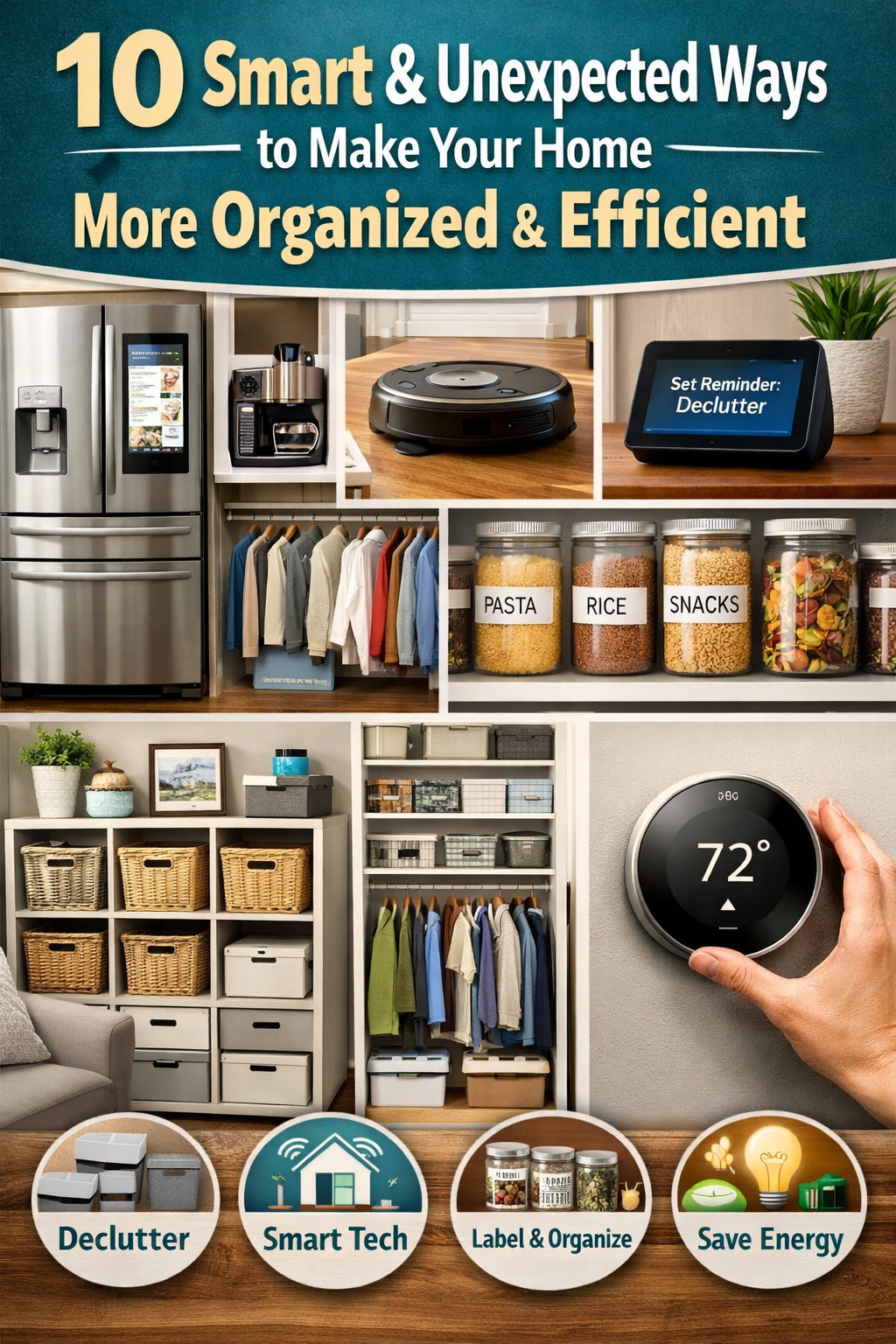
 A clean, clutter-free home saves time and stress. These home organization tips combine creative storage ideas with smart technology to help you “declutter your home” and boost efficiency. From clever shelf solutions to voice-controlled gadgets, each idea mixes smart home organization ideas with real products that bring high-tech home efficiency improvements. Read on for 10 practical, budget-friendly strategies (with well-reviewed product suggestions) to make your space tidier, more functional, and truly modern.
1. Declutter and Sort with Smart Storage Solutions
Start by clearing out unused items, donate or trash anything you don’t need. One expert tip is “declutter your home” first. Once you’ve pared down, use stackable bins, baskets, and vacuum-seal bags to sort what’s left. Choose containers of different sizes to fit your items and maximize space. For example, vacuum-compression bags can shrink winter blankets or off-season clothes by squeezing out air, freeing up closet space. Label each box or bin clearly (see Idea 4 below) so you always know what’s inside. In short, invest in “smart storage solutions”, breathable storage cubes for shoes, plastic drawer organizers for stationery, and airtight jars for pantry staples, so everything has a home and clutter stays under control.
2. Go Vertical with Shelves and Multi-Purpose Furniture
When floor space is tight, look upward. Install floating shelves and wall-mounted racks in the living room, kitchen, or bathroom to keep items off counters. For example, a wall rack can hold pots and pans, while floating shelves display baskets for towels or books. Hooks on walls (for hats, keys, or mugs) also free up shelf and drawer space. Meanwhile, choose furniture that hides storage: ottomans with built-in bins, beds with drawers, or coffee tables with lift-tops. These “two-in-one” pieces look stylish yet stash away blankets, toys, and magazines. Even a bench at the entry can have a compartment for shoes or bags. By thinking vertically and choosing multi-purpose items, you maximize every inch. In fact, one expert notes that “modular storage systems” (stackable cubes, adjustable shelves, etc.) are perfect for flexible needs, letting you reconfigure storage as your belongings change.
A compact closet organizer kit from Rubbermaid (shown above) proves how vertical shelving can transform a small wardrobe. Adjustable rails and shelves create “a home for everything” while keeping floors clear.
3. Install Custom Closet and Drawer Organizers
Closets are prime real estate for smart storage. Swap flimsy wire shelving for a custom organizer kit to neatly arrange clothes, shoes, and accessories. For example, Rubbermaid’s HomeFree Closet Kit is highly rated by reviewers as durable and easy to install, it even offers the “least amount of installation aggravation” for its price. Such kits often include adjustable shelves and hanging rods so you can configure the space to fit your wardrobe. Other popular options include ClosetMaid or Easy Track systems (all-in-one closet organizer systems sold at major stores). If a full kit feels like too much, simply add inexpensive accessories like hanging fabric shelves, shoe cubbies, or over-the-door hooks to segment your closet. As one home storage guide notes, maximizing closet space with hanging shelves and shoe racks can greatly expand usable space.
Beyond the closet, use drawer dividers and inserts in dressers and kitchen cabinets. Drawer organizers for utensils, underwear, or makeup keep small items from tangling together. The goal is a spot for every pair of shoes, hat, or spice jar, so it’s easy to “declutter your home” each night by returning items to their labeled home.
4. Label Everything and Use Coordinated Containers
Labels make home systems stick. Whether it’s pantry goods, craft supplies, or kids’ toys, clearly marking bins and jars helps everyone (including guests!) know where things belong. Professional organizers swear by label-makers for this reason. Invest in a label printer (for example, the DYMO Label Manager is a popular budget choice) and label even temporary storage: chalkboard labels on bins can be updated as contents change. Stick-on labels on jars or baskets serve as “road signs” that subtly remind you to put items back in place.
Smart storage bins add another layer of organization: look for interlocking or modular bins (like the Stackable Sterilite drawers or Iris plastic bins) so things don’t spill over. Clear bins are great because you can see contents at a glance; decorative baskets work too, as long as you label them. In the pantry, nest similar containers together (only keep 3–4 sizes so lids and containers stack neatly). When everything is labeled and contained, it’s much easier to maintain that organized look.
5. Put Robots and Smart Gadgets to Work for Cleaning
One unexpected way to keep a house neat is to automate the cleaning itself. Robot vacuums (like the iRobot Roomba or Eufy RoboVac) have become everyday helpers. These devices run on schedules and can quietly clean carpets and hard floors while you’re out or sleeping. You’ll often come home to cleaner floors without lifting a finger. For example, one blogger raves that his robot vacuum “literally will never be seen”, it tucks under the sofa and does its job on a schedule. More advanced models even empty themselves and have smart navigation to avoid getting stuck.
There are robotic options beyond vacuuming, too. Smart mops or floor washers (like the iRobot Braava) keep tile and wood clean. If heavy appliances are needed, consider a handheld Dyson or Roomba brand vacuum for quick spot-clean-ups; these cordless models are much more likely to be put away quickly than a bulky corded vacuum. In short, putting cleaning tech to work reduces busywork and ensures tidier floors and surfaces. As one tech article puts it: “Smart vacuums can be set to run while you’re at work or on the go, and they’re so quiet you can even operate them overnight.”
Letting a smart robot vacuum (like Roomba or Eufy) keep floors clean is a major time-saver. Modern models map your home and run quiet cleaning cycles while you’re away.
6. Upgrade Your Kitchen with Smart Appliances
A smarter kitchen can actually keep clutter down by streamlining your routine. Consider a smart refrigerator (for example, Samsung’s Family Hub models). These fridges connect to Wi-Fi so you can check their contents on your phone, add items to a shared grocery list, or even see inside while you’re at the store. Some have door displays for leaving notes or voice-recognition to pull up recipes. By managing food inventory smartly, these fridges help reduce expired food and remind you what’s on hand.
Likewise, choose a smart dishwasher or oven. A Wi-Fi dishwasher (from brands like Bosch or Samsung) lets you start or schedule a cleaning cycle via an app so dirty dishes never pile up. A smart oven can be preheated from the couch and send cooking alerts to your phone, which means you can unload groceries and start dinner without fuss. Even small gadgets like a voice-activated faucet (which turns on with a hand gesture or voice) save time and keep the kitchen hygienic. Finally, a smart coffee maker that syncs with your alarm clock ensures a fresh brew is waiting in the morning. All these devices (though pricier) turn kitchen chores into seamless routines. As one expert notes, smart appliances like these improve convenience and efficiency in daily life.
7. Automate Lighting and Climate to Save Time and Energy
Smart lighting and plugs may not organize your belongings directly, but they free up brain space and energy bills, a key part of modern home organization. Install a smart lighting system (like Philips Hue or LIFX) so you can schedule lights to switch off at bedtime or on at sunset. This way, you never worry if you left lights on, and you even wake up gently with lights that mimic sunrise. Automated lighting has a proven benefit: it saves on energy bills and can help you feel more alert in the morning. In fact, smart LED bulbs last longer and use far less power than incandescents.
Similarly, use smart plugs (Wi-Fi outlets) to control old lamps or appliances remotely. For instance, plug a fan or heater into a smart socket and set it to turn off when you leave home. Many smart plugs track energy usage, so you can identify power hogs to unplug entirely. A smart thermostat (Nest, Ecobee, etc.) is another upgrade that pays off; it learns your schedule and can cut heating/cooling when you’re out, saving up to 10–15% on bills. All these smart home upgrades (sensors, bulbs, and plugs) form a network of controls that keep your home running smoothly, an efficient backdrop for a tidy household.
8. Voice Assistants and Apps for Daily Reminders
Turn your home into an even smarter hub by adding voice assistants like Amazon Echo or Google Nest. These devices are “the do-it-all hub of your smart home,” able to control lights, thermostats, and music by voice. But beyond that, they help with organization through reminders and routines. You can ask your voice assistant to set a daily “clutter check” reminder or add items to a shared to-do list. For example, say “Alexa, remind me to take the recycling out every Monday,” or “Hey Google, add batteries to my shopping list.” Using voice commands or smartphone apps to track tasks means important chores won’t slip through the cracks.
In the same vein, smart hubs can consolidate control of all your devices so you manage fewer apps. You might use a smart display (like Google Nest Hub) in the kitchen as a family command center, showing your calendar, weather, and notes. By digitally streamlining schedules and reminders, you reduce the mental clutter of remembering errands. One storage blogger even noted that 57% of smart home users save over 30 minutes per day thanks to technology. Every small automaton, timers on appliances, notifications, or even a shared family calendar, frees your mind to focus on keeping spaces organized.
9. Use Baskets, Bins, and Drawer Systems Strategically
Of course, not all solutions need high tech. Embrace stylish storage baskets and bins throughout your home. In the bathroom, large woven baskets can hold towels or toilet paper. In the living room, decorative bins under a console table hide toys or magazines. The key is consistency: pick matching baskets or bins for each room to keep a cohesive look. For kitchen drawers, use organizers and dividers (bamboo cutlery trays, modular spice jars, etc.) so every utensil or ingredient has its own slot. In the bedroom, under-bed rolling bins are hidden yet handy for seasonal clothes.
Modular cube storage units (like IKEA’s Kallax system) work great in offices or playrooms, where you can adjust compartments for books, games or files. As one storage guide puts it, “modular storage systems are perfect for maximizing your space because they are adjustable and customizable”. Even something as simple as a set of drawer baskets keeps loose items from spilling out. By using these coordinated containers and modular systems, you build a home organization system that’s both pretty and practical, a cornerstone of any modern, clutter-free space.
Stackable clear bins and jars (like the ones above) let you see what’s inside at a glance. Grouping items in such containers and labeling them keeps the pantry or cabinet organized. You can even find “smart” versions with lids that seal tightly to keep food fresh.
10. Maintain a Routine and Re-Evaluate Often
Finally, the smartest way to stay organized is consistency. Set a simple routine: a 10-minute tidy-up each evening, weekly laundry day, or sorting mail as soon as it comes. Use any smart devices (reminders, apps, or even alarms) to keep these habits. Periodically revisit each area, your closet, garage, or pantry, and ask if everything still belongs. As one organization expert suggests, if you feel overwhelmed, start small with clear bins and smaller products, then build up to larger solutions. In other words, use quick wins (like decluttering or adding a few bins) to motivate you toward bigger upgrades (like a full closet kit).
Remember: a truly organized home is one where each item has a place, and you can find what you need when you need it. By mixing clever storage ideas (vertical shelves, baskets, drawer dividers) with tech-savvy helpers (smart lights, robot vacuums, voice assistants), you turn organization into a low-effort habit. These 10 strategies, grounded in practical products and backed by expert advice, offer unexpected ways to streamline your life. With a little planning and the right tools, you’ll enjoy a tidier, more efficient home that works for you.
Smart Changes, Big Payoff
Getting your home organized and efficient doesn’t mean turning it into a tech lab or living in a catalog. It’s about using practical tools and small routines to make daily life easier. Whether you install a smart thermostat, swap your bins for stackable ones, or let a robot vacuum handle the crumbs, each step chips away at the chaos.
What matters most is that you build a home that works for your life, one where your mornings are less rushed, your evenings are calmer, and your stuff isn’t calling the shots. Use these smart and unexpected ideas to start where you are, and level up one room at a time.
Ready to Level Up Your Space and Lifestyle?
If you’re thinking about buying or selling a home and want expert advice on creating a property that feels organized, modern, and market-ready, Adam Chahl can help.
Adam isn’t just one of Vancouver’s top real estate agents; he understands how smart upgrades and thoughtful design boost both your lifestyle and your property’s value.
Reach out to Adam Chahl and the PLACE Real Estate Team for personalized advice and strategies that make your home stand out — whether you’re staying put or planning your next move.