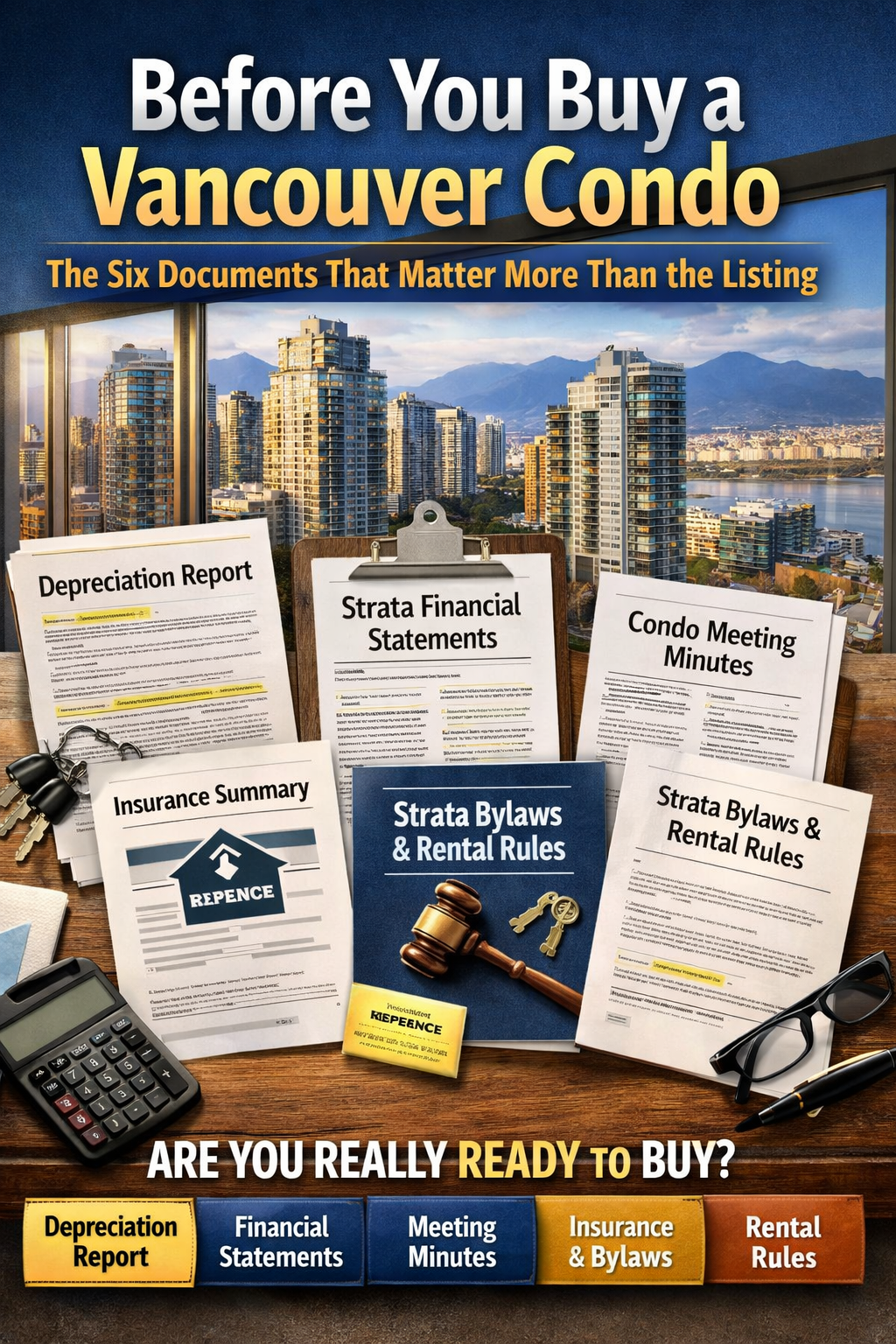
Buying a condo in Vancouver often starts with photos, floor plans, and a great location. That is the easy part. The hard part, and the part that protects your money, lives in the documents most buyers skim or ignore. Listings are built to sell emotion. Documents are built to tell the truth.If you want to avoid surprise costs, special assessments, rental limits, or resale problems, condo due diligence for Vancouver buyers must go deeper. The most important details rarely show up in the listing description. They show up in meeting minutes, financials, insurance summaries, and strata reports.This guide breaks down the six Vancouver condo documents that matter more than the listing itself. You will learn what each document tells you, what red flags to watch for, and how these records reveal real Vancouver condo risks before you commit.
Why Documents Matter More Than the Condo Itself
A condo can look perfect and still be a bad buy. Buildings age. Costs rise. Rules change. Strata councils make decisions that affect every owner. None of that is visible during a showing.Buying a condo in Vancouver means buying into a shared corporation. You are not just buying four walls. You are buying a financial position, shared responsibility, and long-term obligations. Vancouver condo documents give you insight into how that corporation is run.Skipping proper condo due diligence in Vancouver exposes buyers to risks that can follow them for years. Monthly fees can rise. Rental income can disappear. Insurance costs can explode. Resale value can suffer.Documents reveal patterns. Patterns matter more than promises.
Document One: The Strata Depreciation Report
The strata depreciation report is one of the most important tools available to condo buyers in
British Columbia. It outlines the long-term repair and replacement schedule for major building components.This report covers items such as roofs, elevators, plumbing, windows, parking membranes, and exterior cladding. It estimates when these items will need work and how much that work may cost.
What to Look For in a Strata Depreciation Report
A strong report shows that the strata understands its future obligations. It should be recent, detailed, and referenced during council discussions.Red flags include outdated reports, missing components, or large expenses scheduled with no clear funding plan. If the report shows major work coming soon and the strata have limited savings, owners may face special assessments.The strata depreciation report helps you judge whether monthly fees are realistic or artificially low. Cheap fees today often mean expensive surprises later.
Document Two: Strata Financial Statements
Strata financial statements show how the building actually handles money. These records include operating budgets, reserve fund balances, and spending history.Listings rarely mention whether a building is financially healthy. The numbers do.
Key Areas to Review in Strata Financial Statements
Pay attention to the contingency reserve fund balance. Compare it to the size and age of the building. Older buildings should have stronger reserves.Look at year-over-year trends. Rising expenses without matching fee increases can signal future problems. Frequent transfers from reserves to cover daily expenses are another warning sign.Strata financial statements help buyers understand whether fees are stable or likely to jump. They also show how disciplined the council has been with spending.
Document Three: Condo Meeting Minutes
Condo meeting minutes are often ignored, yet they provide some of the most valuable insight into a building. These records show real conversations, real problems, and real decisions.Minutes from annual general meetings and council meetings can reveal disputes, repair issues, legal action, and owner dissatisfaction.
What Condo Meeting Minutes Can Reveal
Look for repeated discussion of leaks, elevator breakdowns, insurance claims, or contractor disputes. One mention may not matter. Patterns matter.Pay attention to tone. Frequent arguments, resignations, or lack of quorum can point to governance issues. A well-run building usually has organized, consistent minutes.Condo meeting minutes often reveal Vancouver condo risks that never appear in listings. They tell you what owners are actually dealing with day to day.
Document Four: Vancouver Condo Insurance Summary
Vancouver condo insurance has changed dramatically in recent years. Premiums have risen. Deductibles have increased. Coverage limits have tightened.The insurance summary shows what the strata policy covers and what it does not. This directly affects your personal insurance costs and risk exposure.
Why Insurance Deserves Close Review
Check the deductible amounts for water damage, fire, and other common claims. High deductibles mean owners may face large bills if damage occurs.Review coverage limits and exclusions. Some older buildings struggle to secure full coverage, which can impact financing and resale.Vancouver condo insurance issues are now a major factor in buying decisions. Ignoring this document can leave buyers exposed to large, unexpected costs.
Document Five: Strata Bylaws
Strata bylaws for Vancouver condos operate under define how you can live in the building. These rules affect rentals, pets, renovations, noise, and the use of common areas.Buyers often assume bylaws are flexible. They are not.
Common Issues Found in Strata Bylaws Vancouver Buyers Miss
Some bylaws restrict rentals or cap the number of units that can be rented. Others ban short-term rentals entirely. Pet restrictions are common and strictly enforced.Renovation rules can limit flooring changes, soundproofing, or layout modifications. Move-in fees, age restrictions, and usage rules can all affect your experience.Strata bylaws in Vancouver condos enforce shape, lifestyle, and resale options. Always read them before removing conditions.
Document Six: Rental Rules and Policies
Rental rules that Vancouver condos apply can directly impact investors and future flexibility for owners. These rules may exist within bylaws or as separate policies adopted by the strata.
Why Rental Rules Matter Even to End Users
Even if you plan to live in the condo now, rental rules affect future resale and exit options. Buyers value flexibility.Look for rental caps, approval processes, waiting lists, and minimum lease terms. Some buildings allow rentals but make them difficult to implement.Rental rules Vancouver condos enforce can change over time, but existing restrictions often signal the culture of the building. A rental hostile strata can reduce demand and value.
How These Documents Work Together
Each document tells part of the story. Together, they show how the building is managed, funded, insured, and governed.A clean depreciation report means little if financials are weak. Strong reserves lose value if insurance coverage is limited. Good bylaws cannot fix poor maintenance.Condo due diligence for Vancouver buyers requires reading everything as a system, not in isolation.
Common Vancouver Condo Risks Hidden in Documents
Some of the biggest Vancouver condo risks are invisible without proper review.Deferred maintenance often hides behind low fees. Insurance exposure hides behind high deductibles. Governance issues hide behind vague meeting minutes.Special assessments are rarely random. They are usually predictable when documents are reviewed properly.Buying a condo in Vancouver without a full document review turns risk into a guessing game. Smart buyers remove guesswork.
Why Listings Can Be Misleading
Listings highlight features sellers want you to notice. Documents reveal facts sellers may not even know.A renovated kitchen does not pay for a failing roof. A water view does not offset insurance gaps. A quiet showing does not reflect ongoing disputes.Vancouver condo documents are not marketing tools. They are reality checks.
How Buyers Should Approach Condo Due Diligence Vancouver-Wide
Buyers should review documents early, not at the last minute. Rushing through hundreds of pages invites mistakes.Work with professionals who understand
Vancouver condos and know where problems usually appear. Ask questions when patterns show up. Silence in documents can be as telling as noise.Condo due diligence, Vancouver buyers take seriously, protects both lifestyle and long-term value.
What First-Time Condo Buyers Often Miss
Many first-time buyers focus on price and monthly fees. They overlook future costs.They ignore depreciation reports because they look technical. They skip meeting minutes because they seem boring. Those two documents alone often reveal the most.Education beats regret every time.
Why This Matters More in Vancouver
Vancouver condos face unique pressures. Older concrete buildings dominate the market. Coastal weather impacts exteriors. Insurance markets are tight. Construction costs are high.Mistakes cost more here.Buying a condo in Vancouver requires a higher level of scrutiny than many other markets. Documents are the difference between confidence and risk.
Using Documents to Strengthen Negotiation
Documents are not just about protection. They can also support negotiation.Upcoming repairs, low reserves, or insurance challenges can justify price adjustments or condition requests. Sellers may not be aware of these issues until a buyer raises them.Informed buyers negotiate from facts, not fear.
Final Thoughts: Read What Actually Matters
The smartest condo buyers in Vancouver do not fall in love with listings. They fall in love with clarity.Vancouver condo documents tell you how a building lives, spends, plans, and reacts under pressure. They show whether ownership will feel stable or stressful.If you want to reduce Vancouver condo risks, protect your investment, and avoid regret, read the six documents that matter more than the listing. They are not exciting, but they are powerful.Before you buy, know what you are buying into.
Ready to Buy Smarter in Vancouver?
If you are buying a condo in Vancouver and want clarity before you commit, this is where experience matters. Document review is not about checking boxes. It is about understanding risk, future costs, and resale impact before they become your problem.
Adam Chahl, founder of Vancouver Home Search, helps buyers break down Vancouver condo documents in plain language so nothing gets missed. From the strata depreciation report to condo meeting minutes and insurance summaries, every decision is grounded in facts, not assumptions.If you want help reviewing documents, spotting red flags early, and negotiating with confidence, connect with Adam Chahl and the Vancouver Home Search team before you remove conditions. The right guidance now can save you years of frustration later.
Frequently Asked Questions
1. Why is the strata depreciation report so important when buying a condo in Vancouver?
The strata depreciation report shows when major repairs are expected and how much they may cost. It helps buyers see whether the building is preparing for future expenses or setting owners up for special assessments.
2. How far back should I review condo meeting minutes?
Ideally, review at least two years of condo meeting minutes. This helps identify ongoing issues, repeated repair concerns, or disputes that could signal larger Vancouver condo risks.
3. What should I look for in strata financial statements?
Focus on the reserve fund balance, spending trends, and whether operating costs are rising faster than fees. Weak financial statements often point to future fee increases or assessments.
4. How does Vancouver condo insurance affect me as a buyer?
Vancouver condo insurance determines coverage limits and deductibles for the entire building. High deductibles can mean owners share high costs after claims, even if they were not at fault.
5. Do rental rules matter if I plan to live in the condo?
Yes. Rental rules Vancouver condos enforce affect resale value and future flexibility. Even end users benefit from buildings that allow reasonable rental options.