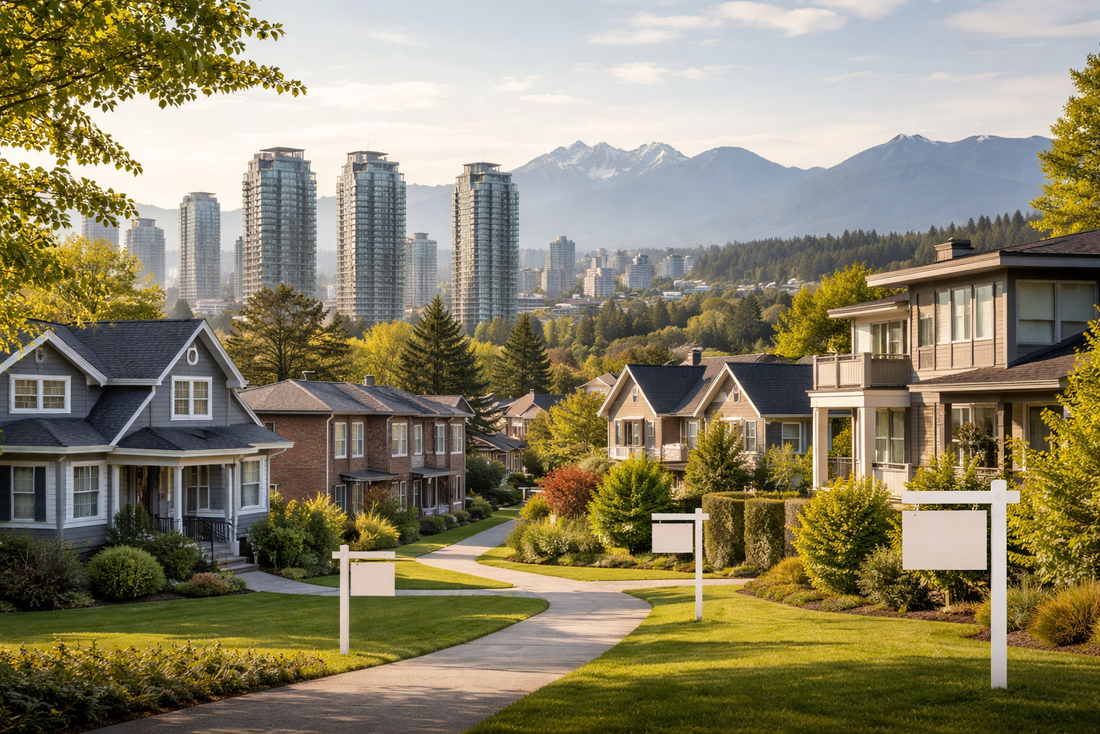
 Vancouver’s housing scene has cooled down a lot since the crazy highs of 2020–2022. By late 2025 the market looks much different: sales are sluggish and inventory is piling up. Greater Vancouver REALTORS® (GVR) data show home sales in November 2025 were about 15% below a year earlier, while total active listings jumped by double digits. In plain language, there are more homes on the market than there were last year. This trend gives home shoppers extra choices and bargaining power.
 As one expert noted, “inventory remains healthy, providing buyers ample choice” and forcing sellers to accept that prices must adjust to these new conditions. In short, the Vancouver market today is a far cry from the white-hot seller’s market it was a few years ago – it is much more balanced, and in many ways tilting toward buyers.
To see why this is significant, let’s cover some basics. A buyer’s market is when supply outpaces demand, so buyers can negotiate harder; a seller’s market is the opposite (lots of competition, rising prices). One useful metric is the sales-to-active-listings ratio. In Metro Vancouver, this ratio was only about 12–13% in late 2025 – meaning only ~12 of every 100 listed homes sold in a month. Historically, ratios under 12% tend to put downward pressure on prices, while ratios above 20% push prices up. GVR’s data confirm this: they report that with sales subdued and inventory plentiful, “properties are taking longer to sell, and pricing has continued to soften slightly across most market segments.”.
In other words, at least for now buyers generally have a bit more negotiating leverage than they did during the recent boom. Even RBC Economics has pointed out that Vancouver’s inventory is “abundant” giving buyers extra time and options and “bolsters their hand in negotiating prices”. Market Snapshot (Late 2025): Sales are down ~15% from last year, total active listings are up ~14%, and average prices have edged down (the benchmark composite price fell about 3.9% year-over-year). The sales-to-listings ratio is only ~12.6%, a level that usually signals mild downward pressure on prices. In short, the market has cooled, and buyers currently have more choices than they have in years.
Buyer vs. Seller Market: Who’s Got the Edge?
Putting all the data together, the simple answer is that Vancouver in late 2025 (heading into 2026) is closer to a buyer’s market or at best a balanced market – not a red-hot seller’s market anymore. Inventory is high, sales are low, and both banks and realtors are describing the market as favouring buyers. For example, one analysis explicitly classifies the current Vancouver property market as a Buyer’s Market due to the higher inventory levels. Likewise, industry reports note that “the growing inventory levels are sitting longer as buyers hold back,” suggesting that "the market trade[s] sideways" and buyers can pick their spots.However, it isn’t uniform across the board. Several experts point out that the balance varies by property type.Lower-priced homes (especially those with legal suites or in more affordable areas) are still in relatively high demand, so in those segments, sellers may still see quicker sales and tighter competition. In contrast, luxury and high-end listings have plenty of supply and fewer buyers chasing them, so these are clearly tilted toward buyers. For example, forecasts suggest that in 2026, entry-level homes will lean toward sellers, while higher-end properties will favor buyers due to excess inventory. In practice, that means first-time buyer condos or modest townhouses might move faster, whereas big detached homes or pricey condos give the buyer the upper hand. Overall, though, most indicators (low sales, high listings, and experts’ commentary) agree that Vancouver is trending away from a classic seller’s market.
Today’s Vancouver Real Estate Trends
What’s driving this shift? Several factors: higher interest rates, tighter mortgage rules, and slower economic growth have cooled demand. At the same time, developers and sellers put many homes on the market (from condo projects to existing houses), so supply is up. Recent reports highlight this inventory surge. In October 2025, there were over 16,000 active listings in Metro Vancouver, about a 13% jump from the year before, and far above the seasonal norm. With “more supply on the market and fewer buyers,” the market dynamics clearly favour buyers right now. Indeed, research by Jamie Stewart notes that buyers are gaining negotiating leverage as listings pile up.This trend is visible across the region: detached, attached, and apartment markets all have more options than last year. Brokers say both condo and townhouse inventories are especially high, giving those buyers plenty of power. For example, Nesto’s latest report finds that even though Vancouver’s benchmark home price is still over $1.1M, it’s down nearly 4% from last year. Similarly, GVR notes that active listings are currently about 36% above the 10-year average. All these signs point to a softening market: buyers can be selective, and sellers are having to price more realistically.
Key Trends: Sales have slowed to multi-year lows, inventory is at multi-year highs, and price growth is flat or slightly down (depending on the segment). Experts summarize it this way: Vancouver is moving toward a more balanced market, even “buyer-favorable” in places. For buyers today, this means more listings to look at and generally weaker competition. For sellers, it means preparing for longer selling times and possibly lower sale prices than in 2021–2022.
Vancouver Home Prices Forecast for 2026
So what’s ahead? Looking into 2026, most forecasts predict only modest price changes. The big swings of the past few years aren’t expected to return quickly. In fact, several forecasters see prices staying flat or even dipping slightly. For example, Royal LePage projects that the aggregate price of a Greater Vancouver home could fall about 3.5% over 2026.They specifically forecast detached house prices down 5% (to about $1,610,900) and condo prices down 3% (to about $712,900) by 2026. Another outlook suggests the average price will have only a minimal decline by spring 2026 (around 1–3% lower than now).On the other hand, some analysts point to potential stabilization or modest gains if demand picks up.
The Nesto outlook (citing GVR data) notes that if housing supply remains tight relative to demand, prices could inch up slightly in 2026. In practice, local forecasts generally call for either a slight further decline or a flat/stable market next year, basically no surge in prices, but also no big crash. That’s consistent with CMHC’s projection of “marginal growth in sales and prices in 2026” for Vancouver.Overall, the Vancouver home prices forecast for 2026 is for a largely sideways market. Prices will likely stay within a few percent of where they are now. Any modest price declines in the first part of 2026 could be offset later if interest rates ease or demand improves.
Many experts highlight one key factor: Buyer activity is currently selective, so prices only hold up where they meet today’s market. Randy Ryalls (Royal LePage) puts it plainly: with sales well below normal and inventories rising, “softer conditions may persist for some time.” In short, don’t expect Vancouver to suddenly rebalance into a booming seller’s market next year.
Vancouver Condo Market 2026
The condo segment mirrors these trends, often even more so. Condos have seen some of the biggest price drops because a lot of new units have come online. As of late 2025, the average condo price in Vancouver was about $714,300, roughly 5.2% lower than a year earlier. Many forecasts see condos slipping a bit more. For example, the Royal LePage outlook expects Vancouver condo prices to fall about 3% in 2026. Mortgage analysts note that the condo inventory is very high relative to demand, making it solidly a buyer’s market right now.For condo buyers, the current environment offers opportunities: plenty of units to choose from, and price negotiations are more common.Sellers of condos (especially higher-end projects) should be prepared for slower sales and might need to incentivize buyers or drop prices. In fact, some recent reports mention condo projects offering extra perks (free parking, upgrades, etc.) instead of large price cuts, since supply is strong.Renters have also benefited: average rents dipped slightly in 2025 (a ~3–5% drop for one- and two-bedroom units), which eased some housing costs. But homeownership is so expensive in Vancouver that low rents haven’t dramatically spurred condo purchases yet.
Bottom line on condos: The Vancouver condo market in 2026 will likely remain favourable for buyers. Forecasts lean toward flat or small declines in prices. If you’re buying a condo, now is one of the rare times you’ll have real bargaining power. If you’re selling, realistic pricing and incentives will be key.
Is Now a Good Time to Buy a Home in Vancouver?
That’s a question many people are asking. And the short answer is: it depends on your situation, but by many measures, yes, this is a reasonable buying opportunity, especially compared to the frenzied market of 2021–2022. Here’s why:- More inventory, more choices. As we’ve seen, buyers today have an unusually large selection of homes. This gives you the ability to shop around and compare options. One real estate report even points out that “if you've been waiting on the sidelines, now could be one of the best windows to buy” because of higher inventory and downward price pressure. That means listings you might have missed earlier are still on the market, sometimes at softer prices.
- Stable or improving conditions. Mortgage experts note that prices have been easing and interest rates might have peaked. One analysis suggests that “later in 2025 or 2026 will be a better time to buy than now,” because if the market slows further prices could dip more. But that’s a tactical argument. If you want to buy in the next year or two, you won’t necessarily do better by waiting too long, and you face the risk that prices and rates could climb again. In practical terms, if you see a home you love at a fair price now, it often makes sense to move on it. Over the long term, Vancouver real estate has tended to rise in value, and locking in a home now can shield you from future inflation.
- Affordability and leverage. While Vancouver is still Canada’s priciest market, prices are lower than they were a year ago. If you can handle the mortgage (and have a down payment), experts say now can be strategic. For example, the REMAX outlook calls 2026 a “strategic year to buy” because interest rates are attractive by historical standards and prices are relatively subdued. Additionally, in today’s market buyers often use techniques like subject-to-sale offers (selling their old home contingently) to increase their buying power.
There’s no urgency like in a bidding-war era, so you can shop more calmly. If you’ve been wondering, “Is now a good time to buy a home in Vancouver?”, the answer from most experts and data seems to be: It can be, if you’re prepared. With a softening market and no mad rush of buyers, you can take your time. And remember, historically, Vancouver real estate has strong long-term growth, so buying when prices are stable or dipping slightly can position you well for the future.
Looking Ahead: Vancouver’s Housing Future
The big picture is that Vancouver’s market is entering a more normal phase. The extreme seller’s market of the pandemic years is over, and 2026 looks to be calmer and more balanced. For both buyers and sellers, this means planning and patience will pay off. Buyers can get more value and should negotiate smartly; sellers can still find buyers, but should price competitively.The future is bright for those who stay informed. Keep an eye on key signs: inventory levels, interest rates, and economic news (e.g. immigration plans, inflation), as these will shape the housing outlook. But one thing is clear – Vancouver remains a desirable place to live. Over time, the region’s strong economy, limited land, and appeal continue to underpin its real estate value.
No matter what happens month to month, remember: the perfect time to buy or sell is when you are ready. With the knowledge and contacts you have, you can make a confident move. Stay engaged with the market, watch the trends we’ve discussed, and when the right opportunity comes, whether it’s finding a great deal or selling at the right price, you’ll be ready to act.
Take the Leap – Partner with Adam Chahl
Your Vancouver home journey doesn’t have to be a solo adventure. Adam Chahl is a local real estate professional who knows Vancouver inside and out. He keeps a close eye on the Vancouver housing market 2026 trends and can help you navigate today’s buyer-friendly conditions. Whether you’re hunting for that perfect condo or a family home, Adam can provide tailored advice and guide you through the process.Ready to make your move? Contact Adam Chahl for a friendly, no-pressure chat about your goals. He can walk you through the current Metro Vancouver housing market, share insights on pricing, and help you craft a winning offer. Reach out to Adam today and take the first step toward owning your Vancouver home!